

Table of Contents
- How to Choose the Perfect Wedding Venue by Defining Your Priorities
- Defining Your Wedding Style and Guest Count
- Budget Allocation for Venue Expenses
- Essential Venue Features and Amenities
- How to Choose the Perfect Wedding Venue Through Practical Logistics
- Availability and Booking Windows
- Site Visits: What to Look For and Ask
- The Venue Tour Checklist
- Asking the Right Questions
- Final Thoughts
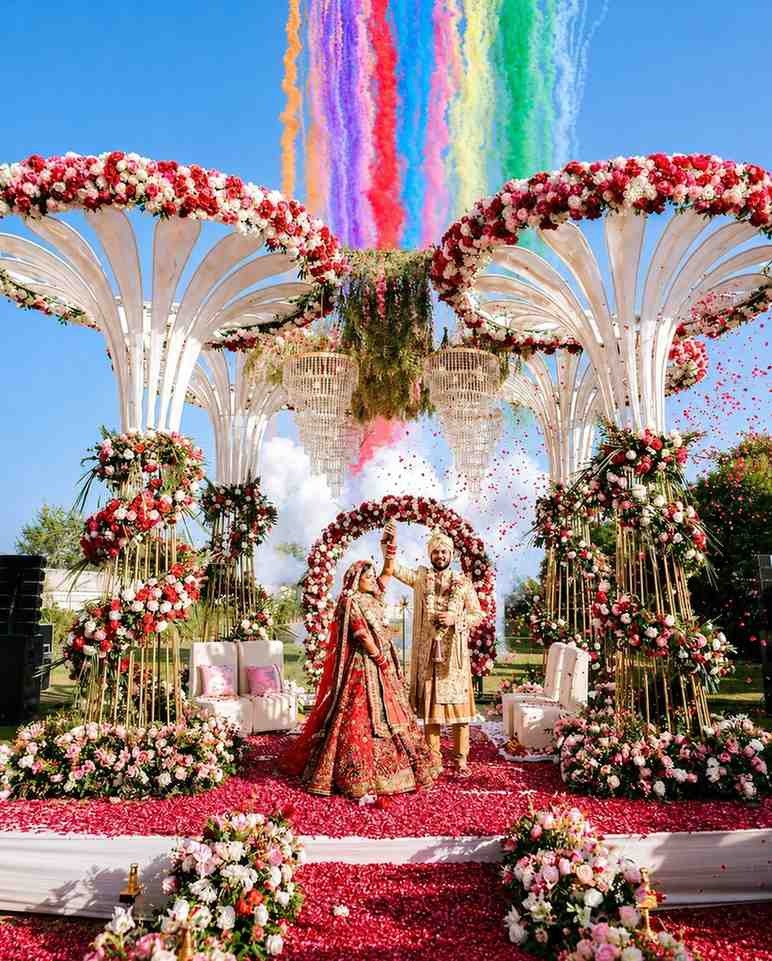
The champagne flutes are prepared. Your dream dresses come true one by one, while your guest list grows exponentially with every spreadsheet update. Since the marriage date has been set, couples must start looking for the locations where they have to hold their ceremony and reception. The choice of this element impacts all the following decisions, so it is critical to learn how to find venues for a wedding efficiently.
The venue defines the entire course and the atmosphere, since any details, from the first handshake to the final toast, will depend on it. Moreover, the place is the most critical element, considering that other factors can be changed to achieve the most comfortable and romantic day ever. Thus, if you know how to choose the place for the wedding, and especially the venue for your reception, you will significantly reduce the stress levels and effort needed for the whole event.
How to Choose the Perfect Wedding Venue by Defining Your Priorities

Defining Your Wedding Style and Guest Count
Start with your guest list. This is probably the easiest way to narrow things down since it rules out all venues that are too small or too large. If you have 200 guests, you can’t fit them into a 100-person space. Once you have an accurate number, it’s time to consider style. Do you want something rustic like a barn or something more modern like a hotel? Your venue sets the tone for the rest of the event, so think about what kind of atmosphere you want to create and what kind of decor you plan on using. A hipster venue will require different touches than one that’s more traditional. If you know the style you want, you’ll save money by not having to rent out an entirely different space and by spending less on flowers and other decorations.find the best banquet halls, marriage gardens, and luxury wedding hotels in your preferred city and book with confidence through MyBestVenue.
Budget Allocation for Venue Expenses
The costs of a venue include much more than just rent; you need to create a budget breakdown to estimate the total expenses. Firstly, you will have to pay a catering minimum, service charge, taxes, etc. Therefore, your venue choice should have the expected additional fees included in your budget, as some of them could exceed your initial expectations by 25% or more. Get all the fees on a written list to understand your potential costs fully.
You should set a range within which the venue would be appropriate, according to your general budget. When planning the event, you need to keep in mind that the venue at the upper edge of your price range can push it further upwards due to additional costs. Ask whether the venue has any discounts for low season or specific days, such as Fridays or Sundays.
Essential Venue Features and Amenities
Make a list of must-have requirements for your event. Think deeply about what will make your day and your guest's day one to remember. Consider items such as:
-
Natural lighting for all pictures.
-
The dance floor is big enough to fit all your guests.
-
ADA accessibility because you have senior citizens attending.
-
Ceremony site on the venue.
-
Availability parking or valet service.
If any of these are not available at a given place, cross it off your list. Don't try to figure out how to work around it because more than likely, it will become a huge problem.
How to Choose the Perfect Wedding Venue Through Practical Logistics
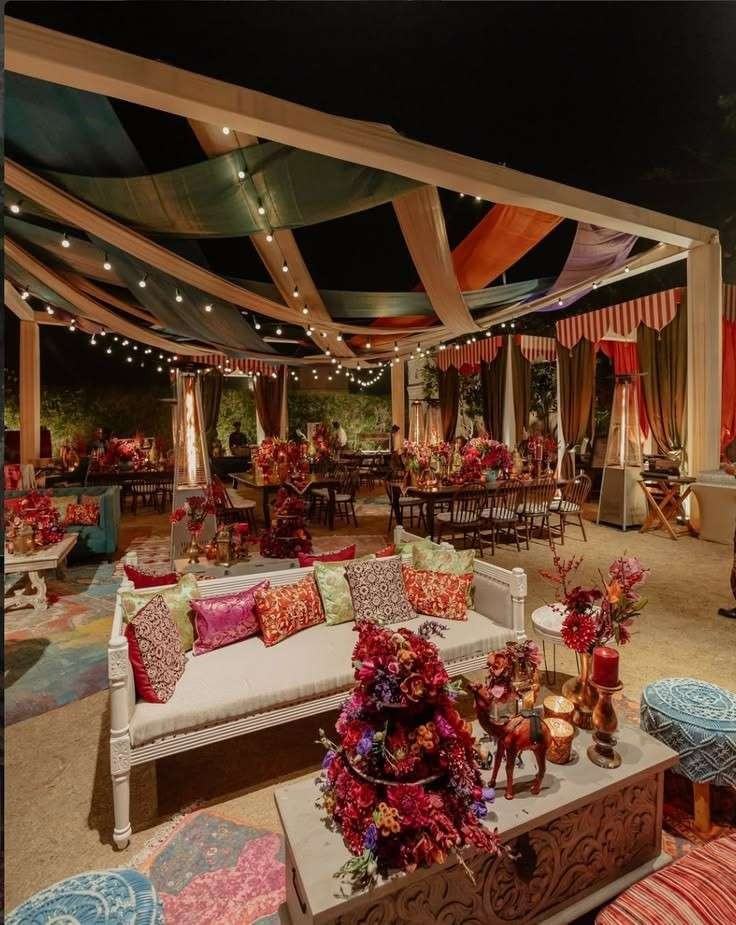
Once you know what you want, you need to look at how a venue functions. A beautiful space that is hard to work with will ruin your planning process.
Availability and Booking Windows
Popular dates tend to sell out quite fast, so it’s a good idea to contact your venue early. The best venues are booked 12–18 months in advance. If you have a particular date in mind, you can ask the venue if it is still available. If you are open to some flexibility, ask the venue to suggest dates within your preferred month. The earlier you book, the more flexibility you will have when it comes to coordinating the other details for your event.
Site Visits: What to Look For and Ask
Photos on a website rarely tell the whole story. You must visit the space in person to see the flow and the condition of the property.
The Venue Tour Checklist
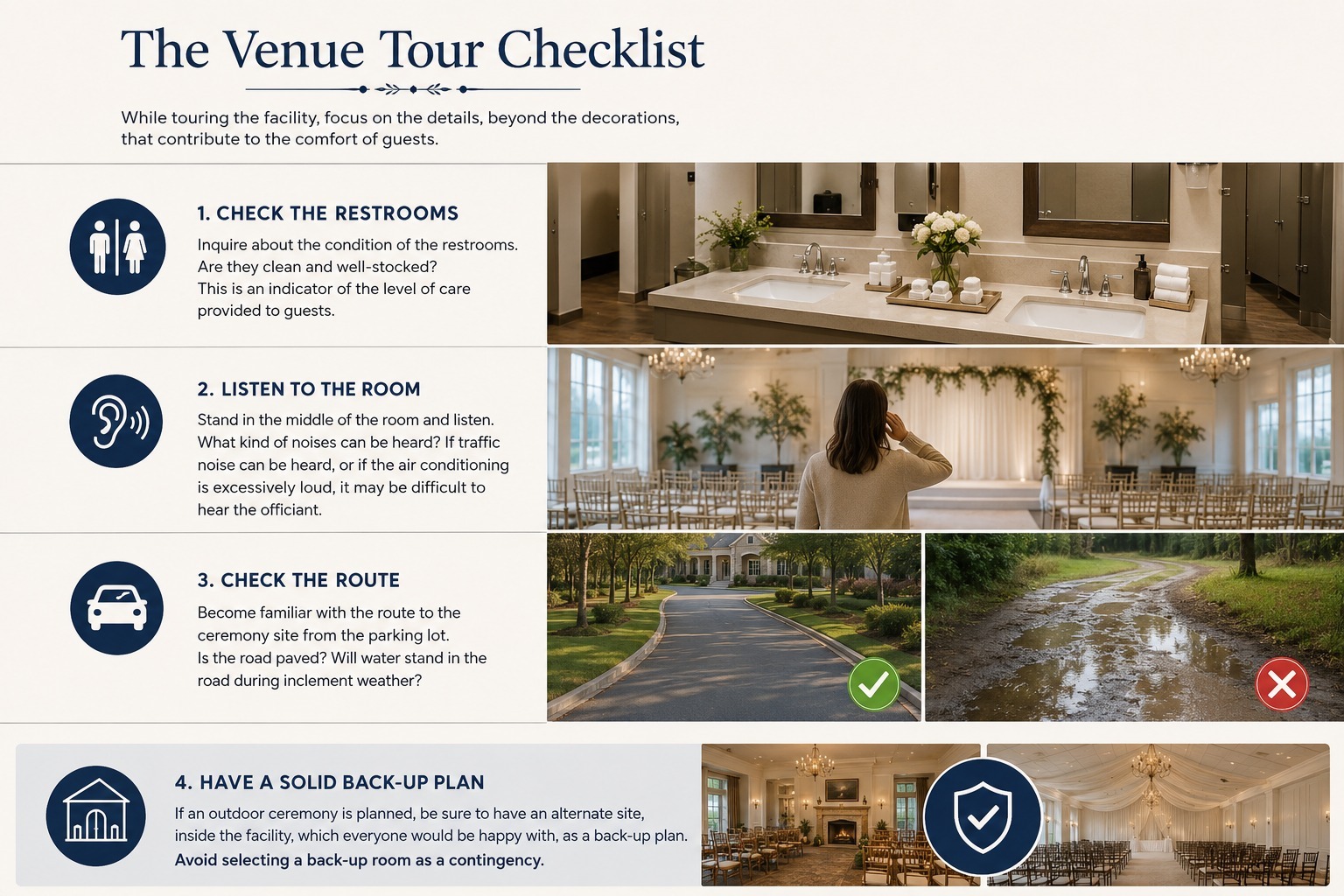
While touring the facility, focus on the details, beyond the decorations, that contribute to the comfort of guests. Inquire about the condition of the restrooms. Are they clean and well-stocked? This is an indicator of the level of care provided to guests. Another thing to consider is standing in the middle of the room and listening. What kind of noises can be heard? If traffic noise can be heard, or if the air conditioning is excessively loud, it may be difficult to hear the officiant.
It is a good idea to become familiar with the route to the ceremony site from the parking lot. Is the road paved? Will water stand in the road during inclement weather? If an outdoor ceremony is planned, be sure to have an alternate site, inside the facility, which everyone would be happy with, as a back-up plan. Avoid selecting a back-up room as a contingency.
Asking the Right Questions
Go into your tour with a list of questions written down. Do not rely on memory alone. Ask the venue manager these items:
-
Are there any additional fees for service or maintenance?
-
What is your cancellation or postponement policy?
-
Does the venue provide event insurance, or do I need to buy my own?
-
What is the staff-to-guest ratio during the dinner service?
-
What happens if there is an emergency on the day of the wedding?
Getting these answers in writing is essential. If a manager promises something, make sure it is in the contract.
Final Thoughts
Choosing the right venue lays the groundwork for the rest of your wedding planning. You've established your standards, investigated the details, and reviewed the contract, so there's no uncertainty as you select a venue that's perfect for you. That's one less detail to worry about as you move forward in your planning.