
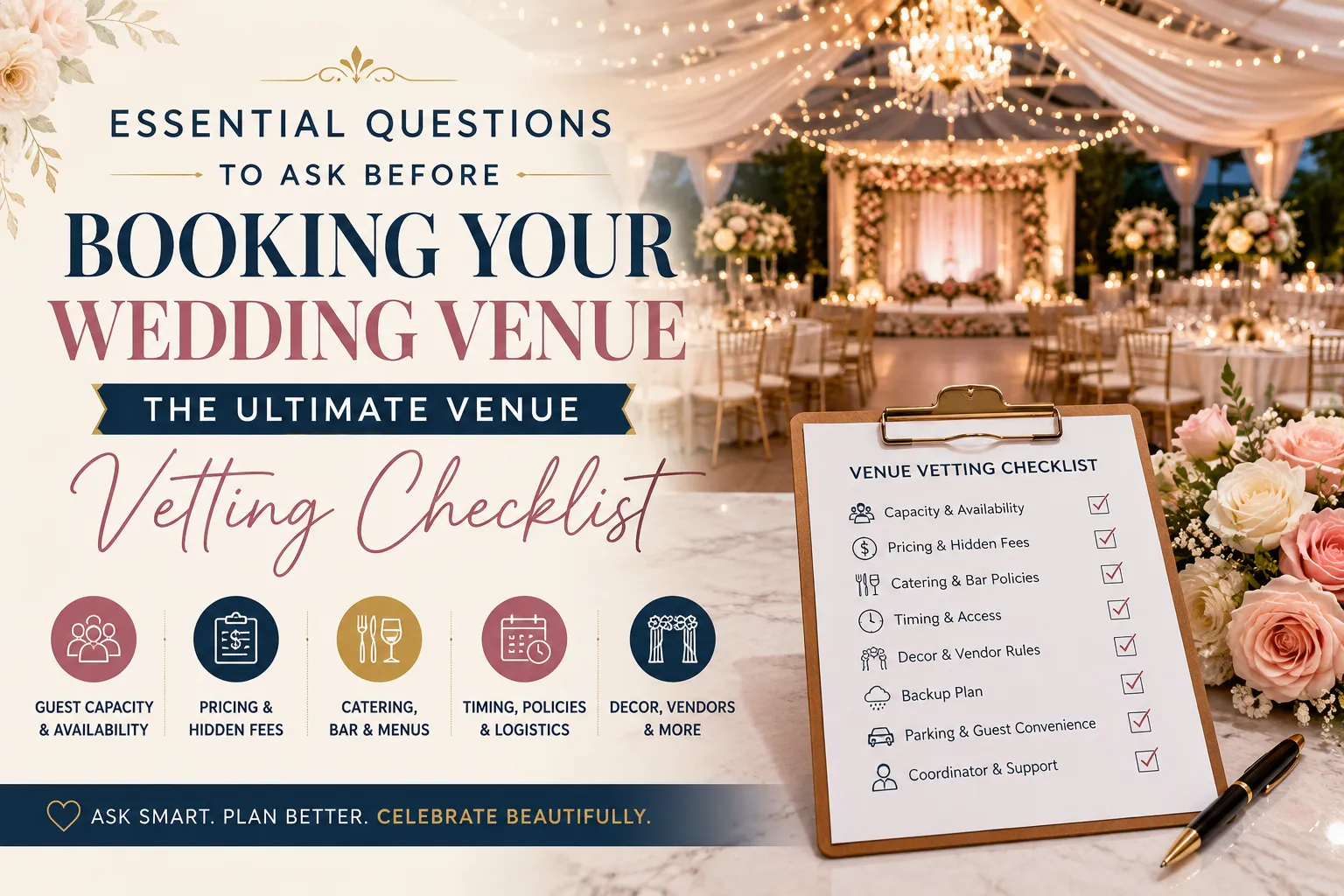
Table of Contents
- 1. Check Venue Availability First
- 2. Confirm the Comfortable Guest Capacity
- 3. Understand Venue Timing and Access Hours
- 4. Ask for Complete Pricing Details
- 5. Know What Is Included in the Package
- 6. Ask About Catering and Food Policies
- 7. Check Decoration Restrictions
- 8. Ask About Music and DJ Limitations
- 9. Check Parking and Guest Convenience
- 10. Check Nearby Hotel and Accommodation Options
- Final Thoughts
Planning a wedding is exciting, but choosing the wrong venue can create stress, extra expenses, and last-minute problems. Your venue is the foundation of your wedding because it affects your guest list, decoration, food, entertainment, and overall experience. Before paying any advance amount, you should ask the right questions and understand every detail clearly.
Many couples book venues only by looking at beautiful pictures or social media videos. Later, they discover hidden charges, limited timing, parking issues, or vendor restrictions. To avoid these problems, use this simple and practical wedding venue checklist before signing any contract.
1. Check Venue Availability First
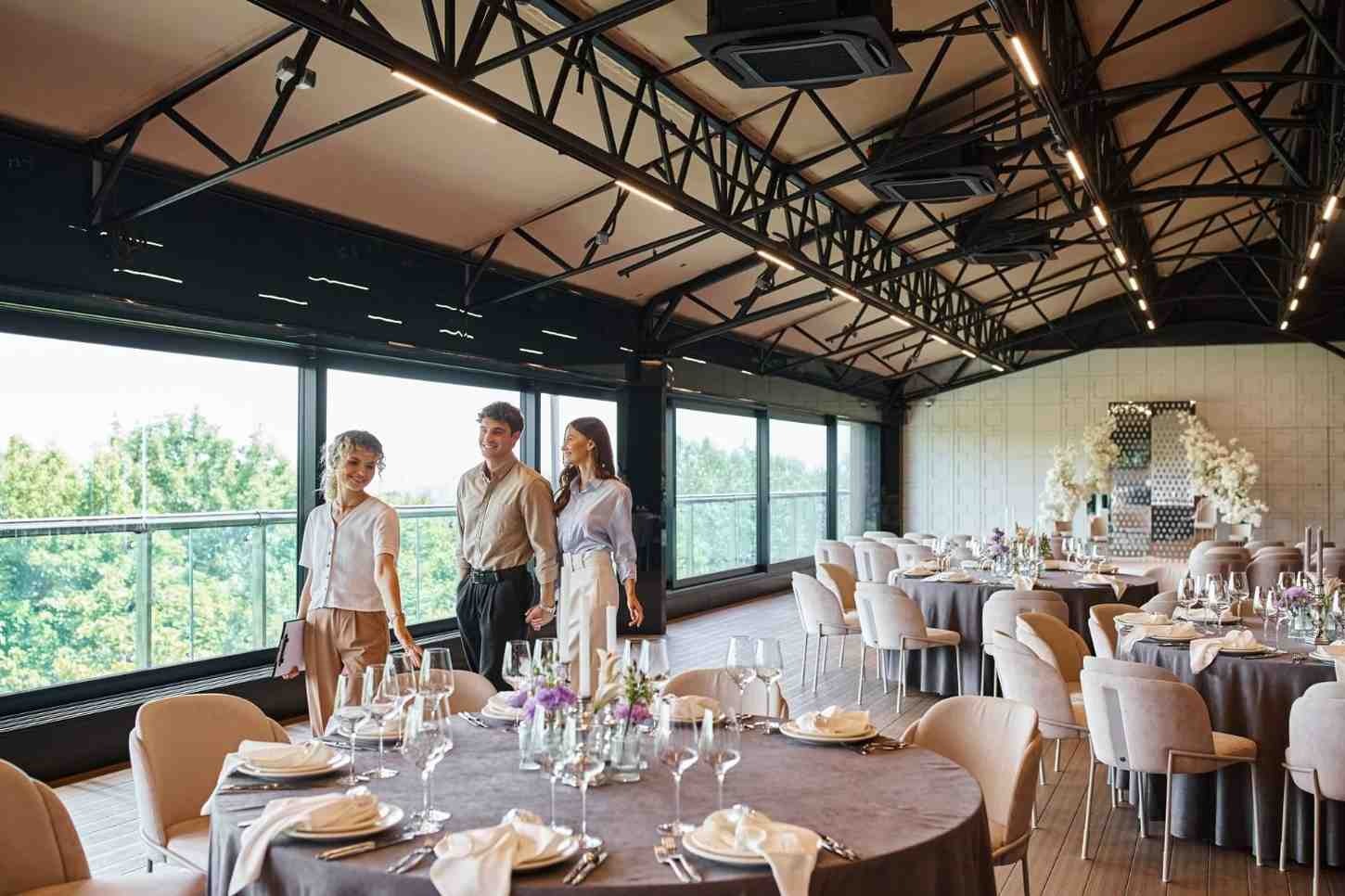
Is your ideal wedding date even an option? Many couples aim for the same times of year, filling venue calendars well before the big day arrives.
Should your schedule allow it, inquire whether the location offers lower rates for midweek dates. Fridays and Sundays tend to cost less compared to Saturdays. Weekday ceremonies often come with reduced pricing - same goes for events held during slower seasons.
Also ask:
-
How long can they hold your date without payment?
-
What is the booking amount?
-
Is the advance refundable?
-
What happens if the wedding date changes?
Understanding cancellation and postponement policies is very important because unexpected situations can happen anytime.
2. Confirm the Comfortable Guest Capacity
Some locations list how many people they can hold, yet those figures often follow rules tied to safety codes. Though a space says it fits 500, trying to fit seating, entertainment areas, and room to move might make it seem packed. What looks good on paper rarely matches real-world ease.
Ask the venue manager:
-
What is the ideal guest count for comfortable seating?
-
Can guests move easily around the hall?
-
Is there enough space for buffet counters and decoration?
A cramped venue can make guests uncomfortable and affect the entire wedding experience. Always imagine the full setup before finalizing the place.
3. Understand Venue Timing and Access Hours
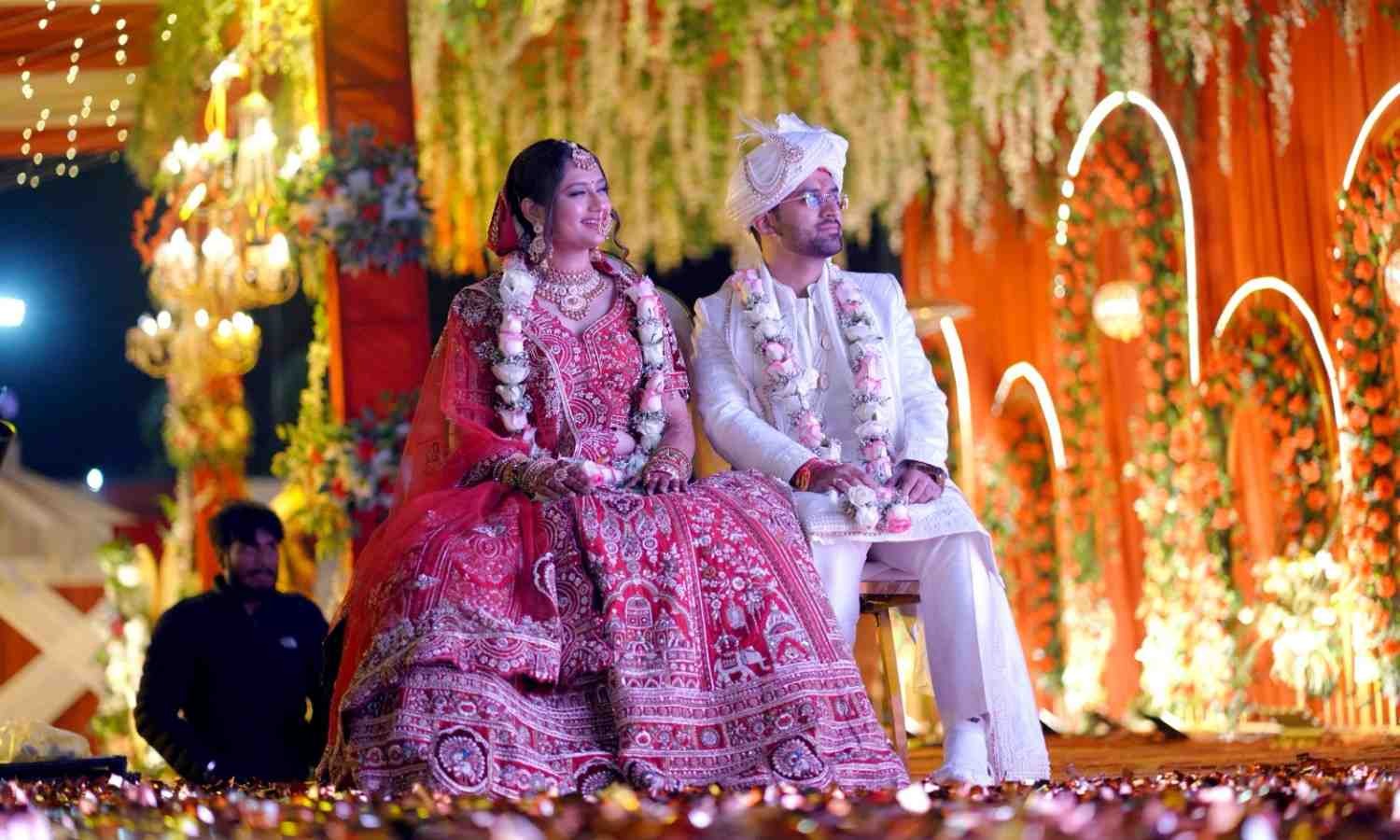
Timing often slips couples’ minds when they discuss setup and cleanup. Certain locations restrict entry to narrow windows, causing headaches later on. Clarify this upfront - details matter once plans unfold
Ask clearly:
-
When can vendors start setup?
-
When does the event need to end?
-
Is extra time chargeable?
-
When must cleanup be completed?
If your wedding functions continue late at night, timing restrictions can become stressful. Always get these details written in the agreement.
4. Ask for Complete Pricing Details
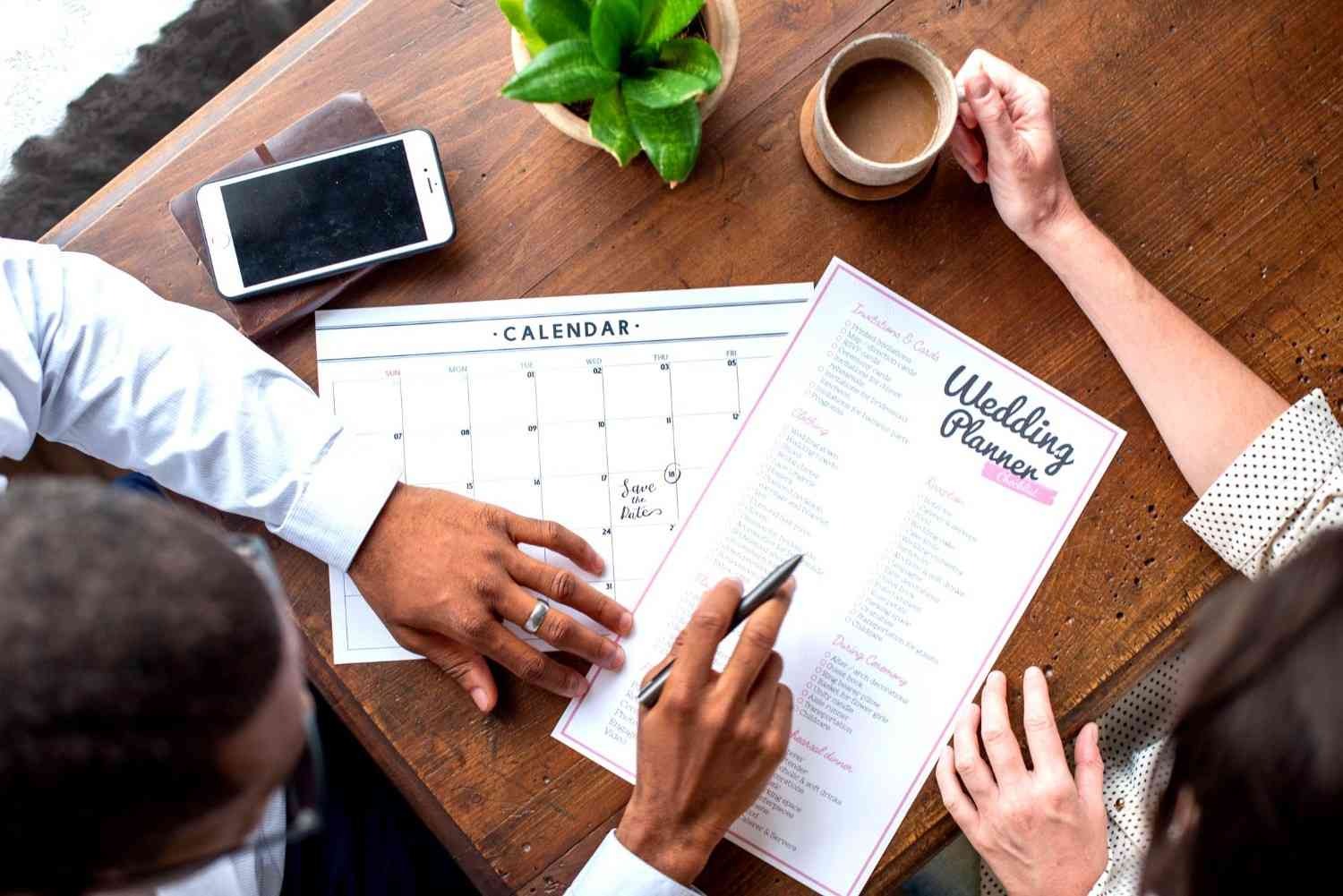
Surprisingly often, pairs believe the site fee covers every need. Yet most locations list extras like chairs, illumination setups, setup help, power generators, car service at night, even trash removal as separate costs.
Ask for a complete cost breakdown, including:
-
Venue rental charges
-
Decoration support
-
Furniture and seating
-
Lighting and sound
-
Generator backup
-
Cleaning fees
-
Taxes and service charges
A cheap venue may become expensive after adding hidden costs. Always compare the “final total cost” instead of only the base rental amount.
5. Know What Is Included in the Package
Wedding locations differ - some supply full-service plans, yet others deliver nothing beyond bare walls. Clarify every detail the site covers prior to reserving. What seems obvious at first might hide gaps later on.
Important inclusions to confirm:
-
Tables and chairs
-
Stage setup
-
Air conditioning
-
Bridal room
-
Power backup
-
Parking
-
Security staff
-
Washroom maintenance
Putting it all down on paper reduces misunderstandings afterward. Sometimes details slip when they are only spoken. A written record keeps things clear over time. What seems obvious now may fade weeks later. Notes serve as a steady reference point when memory wavers.
6. Ask About Catering and Food Policies
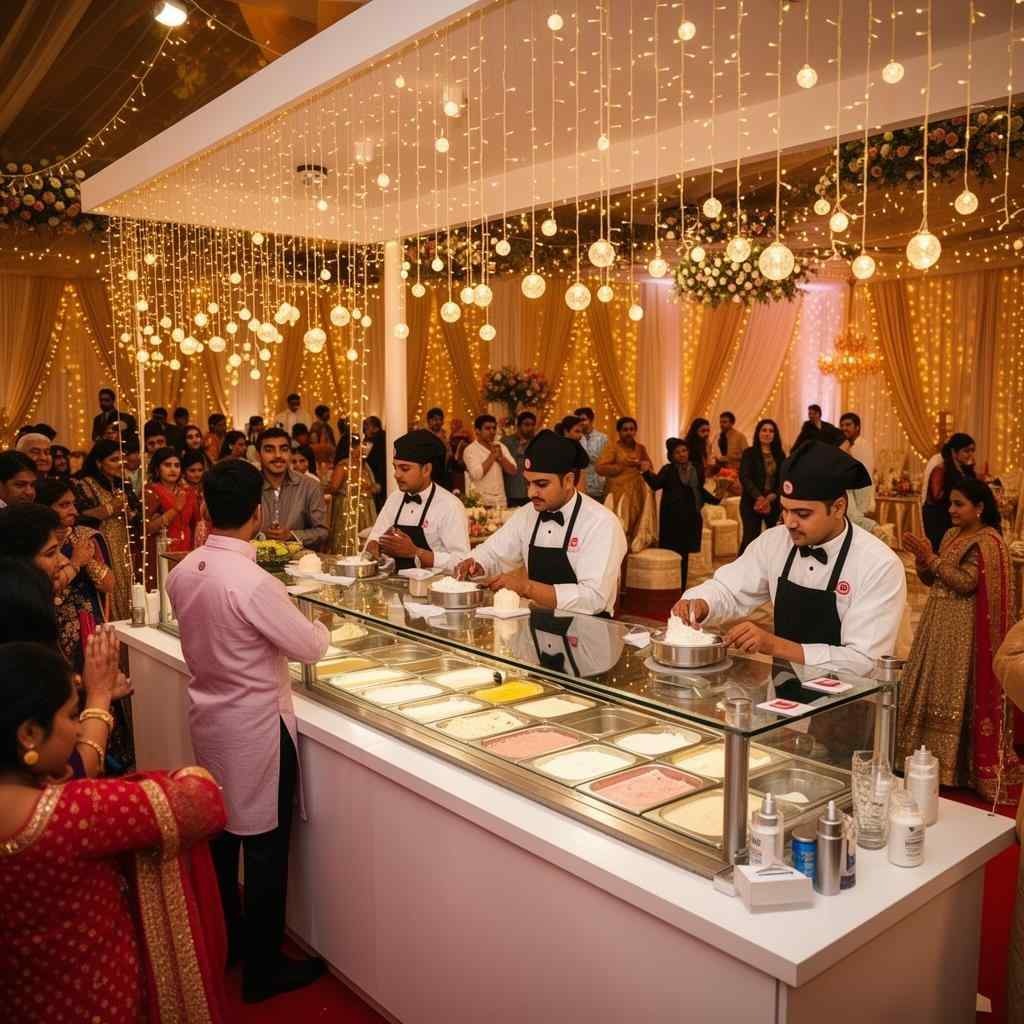
What guests eat often stands out most at an Indian wedding. Certain locations limit food services to their own kitchens; some permit external cooking teams instead.
Important questions include:
-
Can you hire your own caterer?
-
Does an external provider apply a fee?
-
Food tastings - do they happen here?
-
Is it possible to change the menu?
-
Are Jain, vegan, or allergy-friendly meal options accommodated?
Expectations around guest counts can affect pricing - check whether caterers require a baseline number of attendees. Venues sometimes set fees according to preset attendance levels, so clarify that detail early.
7. Check Decoration Restrictions
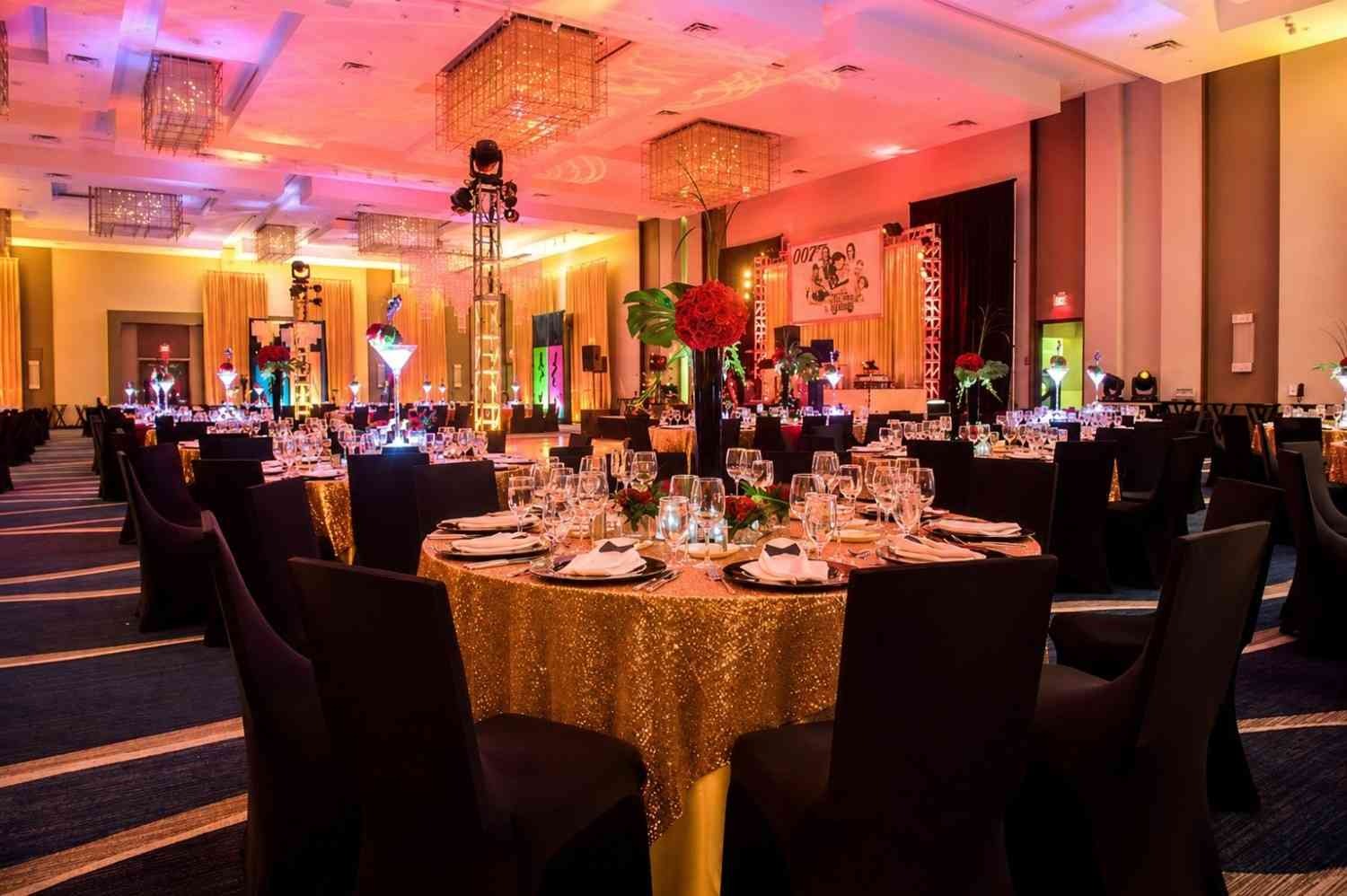
Most pairs dream of lovely wedding setups. Yet certain locations enforce tight limits on what you can display.
Check first - does the space permit it? Find out ahead of time what rules apply. Entry might depend on prior approval. Rules could change how you plan. Confirm details before making decisions
-
Hanging decor from ceilings
-
Fireworks or cold pyros
-
Candles or open flames
-
Floral installations
-
Confetti or flower showers
Older event spaces sometimes limit what you can do inside. Before handing over any deposit, check if your planned decor fits their rules.
8. Ask About Music and DJ Limitations
Some event venues face noise limits due to homes located close by. While rural properties host gatherings, local regulations often cap audio levels. Because neighbors live near these spaces, volume control becomes necessary. Even outdoor celebrations may be subject to quiet hours. Where houses cluster near function sites, sound must stay within bounds.
Important questions:
-
How late is loud music allowed?
-
Outdoor DJing - permitted or not?
-
Sound levels - what about limits on those?
-
Is an audio setup available at the location?
When music rules apply, they might shape how you plan the sangeet, cocktail event, or late-night gathering - best to talk about it sooner rather than later.
9. Check Parking and Guest Convenience
Comfort begins long before arrival. When parking proves difficult, irritation often sets in early. Guests carry that stress inside with them.
Ask:
-
What is the number of open parking spaces?
-
Does the price cover valet service?
-
Does the location allow access for wheelchairs?
-
Do older visitors have access to lifts?
Look at how clean the restrooms are, plus count them - guests notice these things even when they do not talk about it. Unseen but felt, hygiene shapes comfort in quiet ways few expect.
10. Check Nearby Hotel and Accommodation Options
When visitors arrive from distant places, staying close by matters more. For those traveling far, lodging near the event helps ease the journey. Should attendance include out-of-town guests, proximity to where they stay gains importance. With people coming in from elsewhere, convenient housing options start to weigh heavily. Arrivals from remote locations make nearby rooms a bigger concern.
Ask:
-
Close to the location, do any lodgings exist?
-
Guest room deals - does the location offer them?
-
Is it possible for them to organize transport?
Staying in well-located places makes trips smoother while boosting comfort. A relaxed journey often begins where rest comes easily.
Final Thoughts
Choosing where to hold a wedding ranks among the most critical steps in organizing the event. Looks alone - no matter how stunning on camera - don’t guarantee suitability. Rules set by the location, exact costs, time limits, available services, and what happens if weather interferes require clear understanding first. Signing anything should come only after these details are fully reviewed.
Start by digging deep with specific inquiries - then ensure each agreed point appears formally in the document. That step secures spending limits while reducing confusion down the line.
Comfort matters as much as appearance when picking a place to say vows. Choosing wisely at the start makes every next step feel lighter. With the location settled, decisions flow more naturally. A space that adapts well eases stress for everyone involved. Confidence in your setting shifts the whole process into calmer territory.